Calibration vs. Adjustment: Why the Distinction Still Matters

If there is one topic in metrology that continues to be misused, misunderstood, and miscommunicated, even among seasoned professionals, it is the difference between calibration and adjustment. I often remind my readers that words have meaning and consequences for their usage. In measurement science, those consequences can ripple through uncertainty statements, conformity decisions, accreditation findings, and ultimately the trustworthiness of the data we produce.
And here is the crucial part. The meanings have not changed since the day they were written. We have gotten careless in how we use them.
Today, I want to revisit the formal definitions from the International Vocabulary of Metrology (VIM), including the new clarifications in the VIM version 4 draft, and explain why the distinction between calibration and adjustment is not just academic. It is foundational.
What Calibration Actually Is (VIM Definition)
The VIM defines calibration as a set of operations that establish, under specified conditions, the relationship between:
A quantity value provided by a measurement standard, and
The corresponding indication of the measuring instrument being calibrated.
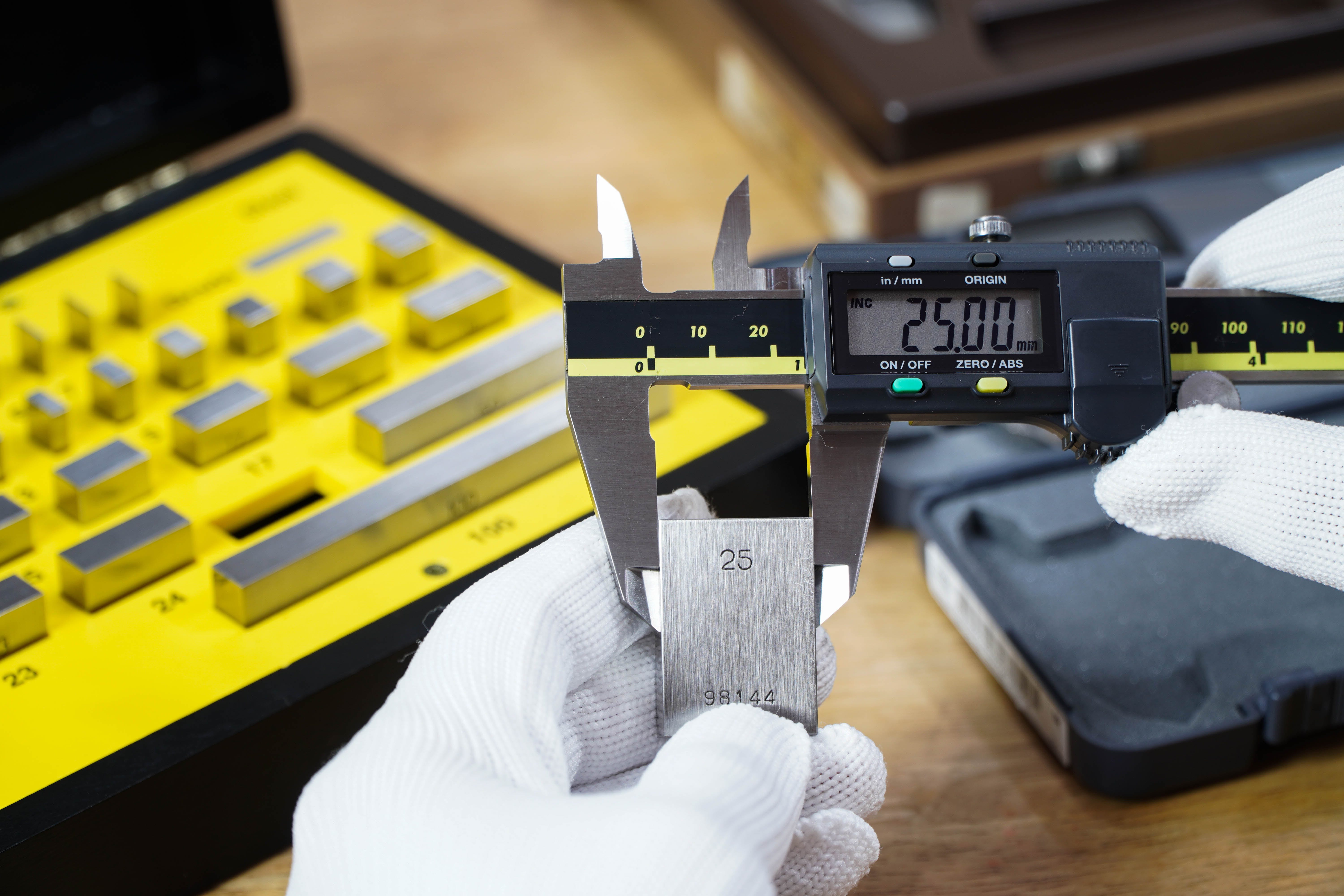
In plain language: Calibration is the comparison of a known to an unknown.
That is it. No turning screws. No tweaking settings. No fixing anything.
Calibration is an evaluation, not an intervention. It tells you what the instrument is doing, not what it should be doing.
The VIM version 4 draft reinforces this with a critical clarification:
Calibration should not be confused with adjustment of a measuring system, which is often mistakenly called self calibration, nor with verification of calibration. Calibration is sometimes a prerequisite for verification, which provides confirmation that specified requirements, often maximum permissible errors, are met. Calibration is sometimes also a prerequisite for adjustment.
This note is important because it directly addresses the misuse of the term “self-calibration,” which is one of the most persistent sources of confusion in the field.
This is why we perform an As Found calibration first. It gives us the truth about the instrument’s performance before anyone touches it. It documents reality.
What Adjustment Actually Is (VIM Definition)
The VIM defines adjustment as the set of operations carried out on a measuring system so that it provides prescribed indications corresponding to given values of quantities being measured, typically obtained from measurement standards.
In other words: Adjustment is what happens between the As Found and As Left calibration.
Adjustment is an intervention. It changes the instrument. It alters performance. It is an intentional act to bring the instrument closer to nominal.
And here is the critical point. Adjustment is not calibration. It is a separate, distinct activity.
The VIM version 4 draft makes this distinction even clearer by stating that calibration may be a prerequisite for adjustment. You must know where the instrument is before you attempt to move it.
As Left Calibration: The Proof of Effectiveness
Once an adjustment is made, we do not simply assume it worked. We verify it.
That verification is the As Left calibration.
As Left calibration answers one question. Was the adjustment effective?
If the instrument now meets tolerance, the adjustment was successful. If it does not, then either:
The adjustment was ineffective,
The instrument is unstable, or
The instrument is no longer suitable for service.
As Left calibration is the evidence. It is the documented confirmation that the adjustment achieved its intended purpose.
Why This Distinction Matters
When people blur the line between calibration and adjustment, several problems arise:
Certificates become misleading
Traceability is compromised
Uncertainty statements become invalid
Customers misunderstand what was actually done
Auditors find nonconformities
Risk increases, sometimes dramatically
If you tell a customer you calibrated their instrument when you actually adjusted it, you have misrepresented the service. If you adjust an instrument without documenting the As Found condition, you have erased the evidence of its performance. If you call an adjustment a calibration, you have violated the VIM and every standard built upon it.
Words matter. Definitions matter. And in metrology, precision in language is as important as precision in measurement.
The Bottom Line
Calibration means comparison
Adjustment means intervention
As Found means truth before adjustment
As Left means proof after adjustment
Verification confirms that the specified requirements are met
Self-calibration is not calibration at all, and the VIM explicitly warns against using the term
These meanings have not changed. They are not negotiable. They are not subject to interpretation.
They are the backbone of measurement science.
And if we, as professionals, do not use these terms correctly, we undermine the very discipline we claim to uphold.